
A “Little River”
Seapoose is an anglicized spelling of the Shinnecock Indian word meaning “little river.” When a cut is made in the barrier beach separating a bay from the ocean, the cut quickly becomes a little river. Bay water runs out at low tide and the ocean runs in at high tide. This cut can occur naturally during storms or can be created by people.
The Shinnecocks are believed to have dug the seapoose at Mecox Bay in Water Mill to keep the salinity of the bay appropriate for shellfish, which they harvested there. The Shinnecock language was not recorded, so we have no record of how they pronounced “Seapoose,” but Southampton Town clerks recorded the word as sea puse, sepoose, sepose, seapoos and other variations.
The Seapoose in Early Town Records
The first mention of the cut in Southampton Town records was made in 1644, when agreements were worked out with the Town for the building of a water mill at a pond and creek north of Mecox Bay. The records note that:
“Every one in the say’d towne from 16 yeares old to 60 (except Magistrate, Minister, Miller and heardsmen) in their own persons shall bee ready so often in the yeare to cutt open sufficiently a gut at meacoxe.”
For the water mill to operate properly, water downstream of the mill had to be kept low.
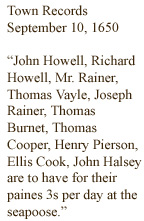
Town records indicate that the seapoose was frequently the subject of heated discussion at town meetings, as colonists involved with their own farms were not always willing to leave their work to open the cut. A November 1652 entry states:
“Isack Willman in a passionate manner said that some of them that voated for the raising of the mill knew noe more what belonged to the sepoose than a dogg.”
Digging the Seapoose
The seapoose has been dug by hand and animal labor. On display at the Water Mill Museum is the old horse-drawn sand scoop once used to make the cut. Frank Benedict, in a September 19, 1905 diary entry, states:
“Seapoose, verry high beach but 5 teams done it in afternoon.”
The Seapoose Today
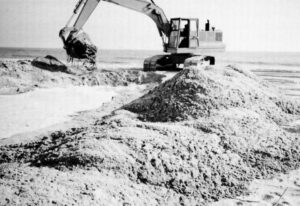
Today, machinery is used to dig the seapoose, and the Town Trustees determine when it should be opened. They receive plenty of advice from baymen who want to let salt water in to encourage shellfish; from homeowners around Mecox Bay and Mill Creek who are concerned about flooding; and from recreational boaters who want a higher water level.
When the seapoose is running, Water Mill bathers enjoy floating down the little river, probably much as Shinnecocks did on a hot summer day.